Thursday, September 30, 2021

INDIA'S FIRST

 INDIA'S FIRST

First President of IndiaDr. Rajendra Prasad
First Vice-President of IndiaSarvepalli Radhakrishnan
First President of Indian National CongressWomesh Chandra Bannerjee
First Prime Minister of IndiaJawaharlal Nehru
First Chief Election Commissioner of IndiaSukumar Sen
First Viceroy of IndiaLord Canning
First Governor-General of IndiaLord William Bentinck
First Chief Justice of IndiaH.J Kania
First Speaker of Lok SabhaG. V. Mavlankar
First Home Minister of IndiaSardar Vallabhai Patel
First Chairperson of Lokpal of IndiaPinaki Chandra Ghose

First Defence Minister of IndiaBaldev Singh Chokkar
First Commander-in-Chief of Free IndiaKodandera Madappa Cariappa
First Commander-in-Chief, Indian Air ForceSubroto Mukherjee
First Field MarshalSam Manekshaw
First Param Vir Chakra WinnerMajor Somnath Sharma
First female Jawan in the ArmyShanti Tigga
First Indian woman to fly fighter aircraft without co-pilotIAF Officer Avani Chaturvedi
First cosmonautSqn Ldr Rakesh Sharma
First woman in the Indian Army awarded the coveted ‘Sword of Honour’ prizeDivya Ajith Kumar


First Olympics Team MedalGold in Field Hockey (1928, Summer Olympics)
First Indian woman wrestler to win an Asian gold medalNavjot Kaur
First Indian woman badminton player to win an Asian Games medalSaina Nehwal
First Indian woman to win a medal at Asian GamesSanthi Soundarajan
First person to win the international bronze medal in skiingAanchal Thakur
First Woman to Win an Olympic Silver MedalP. V. Sindhu in Badminton
First female to represent India at the Summer OlympicsNora Polley, 1924 Summer Olympics
First Individual Gold Medal won byAbhinav Bindra, 2008 Summer Olympics in Beijing
First Woman to Win a Medal in WrestlingSakshi Malik won Bronze in the 2016 Summer Olympics
First British to Visit IndiaThomas Roe
First Chinese pilgrim to Visit IndiaFa-Hien/Faxian
First Indian to reach AntarcticaLt. Ram Charan
First Judge in International Court of JusticeDr. Nagender Singh
First Muslim President of the Indian National CongressBadruddin Tayyabji
First Post Office Opened in IndiaKolkata(1727)
First Wax statue of a Living IndianMahatma Gandhi at Madame Tussaud’s in 1939
India’s First Lok Sabha Member to be elected with a record maximum number of votesP.V.Narasimha Rao
India’s First Open UniversityDr B.R Ambedkar Open University
India’s First UniversityNalanda University
India’s first man in SpaceRakesh Sharma
The first Speaker of the Lok SabhaGanesh Vasudeva Mavalankar
The first and last Muslim woman ruler of IndiaRazia Sultan
The first and the last Indian to be Governor-General of free IndiaC. Rajgopalachari
The first British Governor-General of BengalLord Warren Hastings(1774-1885)
The first British Governor-General of IndiaLord William Bentinck(1833-1835)
The first British Viceroy of IndiaLord Canning
The first Chief Election CommissionerSukumar Sen
The first Chief Justice of Supreme CourtJustice Hirala J. Kania
The first Chief of Army StaffGen. Maharaj Rajendra Singhji
The first Education MinisterAbdul Kalam Azad
The first Field Marshal of IndiaS.H.F. Manekshaw
The first Governor-General of free IndiaLord Mountbatten
The first Home Minister of IndiaSardar Vallabh Bhai Patel
The first Indian Air Chief MarshalS. Mukherjee
The first Indian Commander-in-Chief of IndiaGeneral Cariappa
The first Indian Member of the Viceroy’s executive councilS.P.Sinha
The first Indian Naval ChiefVice-Admiral R.D. Katari
The first Indian PilotJ.R.D. Tata (1929)
The first Indian to cross English ChannelMihir Sen
The first Indian to get Nobel Prize in PhysicsC.V.Raman
The first Indian to join the Indian Civil ServicesSatyendra Nath Tagore
The first Indian to receive Bharat Ratna awardDr. Radhakrishnan
The first Indian to win Nobel PrizeRabindranath Tagore

Wednesday, September 29, 2021

INTERESTING FACTS ABOUT INDIA

FEW WEIRDLY INTERESTING FACTS ABOUT INDIA


 1. India has over 300,000 mosques and over 2 million Hindu temples.

2. Chenab Bridge is the highest rail bridge in the world. (Chenab river in Jammu).

3. Rajasthan has a Temple of Rats.

4. Ladakh road is the highest motorable road in the world. (over 19,300 feet).

5. The popular game “Snakes and Ladders” originated in India.

6.India was the first country to mine diamonds.

7. The village of Shani Shingnapur is famous for not having a door or lock on a single house.

8. India has the highest population of vegetarians.

9. The town of Jaipur is home to the largest sundial in the world, which is a towering 27 meters (90 feet) tall.

10. The Hindu calendar has six seasons.

11.Varanasi is the most ancient surviving city in the world.

12. Varanasi is also known as the birth-place of Ayurveda and Yoga and their ancient healing systems.

13.India is divided into 29 states.

14.Tea is the national beverage of India.

15.The Statue of Unity is currently the tallest statue in the world. The statue, which is a tribute to the independence leader Sardar Vallabhbhai Patel, is located in the western state of Gujarat, where Patel was born. 

16. India was the first country to refine and consume sugar.

17.Shampoo was originated in India.

18. There’s a floating post office in India.it is located in Dal Lake, Srinagar, the post office has begun to serve as a tourist destination.


FUNDAMENTAL RIGHTS AND FUNDAMENTAL DUTIES

 FUNDAMENTAL RIGHTS


FUNDAMENTAL DUTIES


Saturday, August 28, 2021

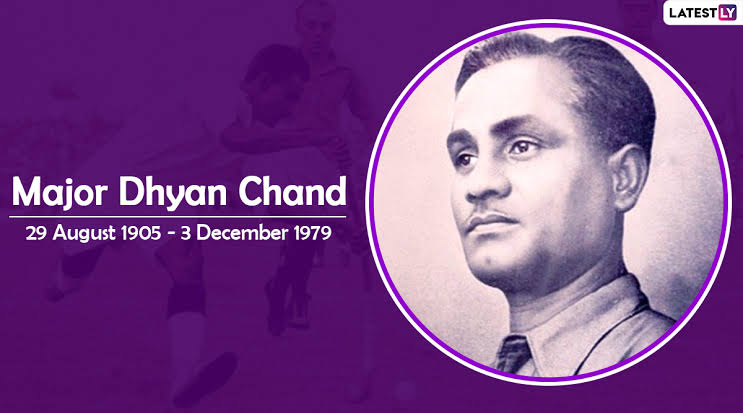
National Sports Day

 Indian National Sports Day


National Sports Day is celebrated every year in India on August 29 since 2012 to
commemorate the birth anniversary of hockey legend Dhyan Chand, widely known as 'Wizard of Hockey'. 

Major Dhyan Chand Singh, was born on 29 August 1905 in present-day Praygraj, UP. After getting a basic education, Dhyan Chand joined the Indian army as a soldier in 1922.He went on to become Lieutenant, Captain and was eventually promoted to Major.

Major Dhyan Chand was a legendary figure in Indian and world hockey. He played a very significant role in helping India complete their first hat-trick of Olympic gold medals with victories at the 1928, 1932 and 1936 Summer Olympics.

he was awarded the Padma Bhushan Award by the Government of India in 1956, the third-largest civilian honour in India. 

Major Dhyan Chand Sport Jewel Award, formerly known as Rajiv Gandhi Khel Ratna Award in Sports and Games, is the highest sporting honour of the Republic of India.

National Sports Day is celebrated extensively at the national level. It is organized every year in the Rashtrapati Bhavan and the President of India presents National Sports Awards to the outstanding players of the country. In 2020, the awards were presented virtually due to the COVID-19 pandemic. 

Under the National Sports Award, players and former players are honoured with awards such as Rajiv Gandhi Khel Ratna Award, Arjuna Award, and Dronacharya Award. Along with all these honours, the "Dhyan Chand Award" is also given on this day.

This day is observed to raise awareness about the value of sports and daily activities in everyone's life, emphasizing the importance of being fit and healthy.


Thursday, August 26, 2021

Nobel Prize Winners of India

 Nobel Prize Winners of 🇮🇳India 


  • Rabindranath Tagore, Nobel Prize in Literature (1913)
He won India’s first Nobel prize. He was a poet, philosopher and an esteemed educationist. He was the first non-Westerner to be conferred with the Nobel prize in Literature. He won the nation’s first Nobel prize for his collection of poems, compiled in his book, Gitanjali. The book is still widely read across the world and particularly in India.


  • C.V. Raman, Nobel Prize in Physics (1930)
     He was bestowed with the Nobel prize, in 1930, for his distinguished contribution in Physics. He did exceptional work on the behaviour of light or light scattering. The research he did was named after him,  termed as the Raman Effect. He discovered the reasons for the blue colour of the sky. He was the first person from the whole of Asia to achieve this feat in physics. His day of discovery is celebrated as National Science day in India on 28th February.


  • Har Gobind Khorana, Nobel Prize in Medicine (1968)
He was awarded the Nobel Prize in Physiology, in 1968, for his work in genetic research which showed how the order of nucleotides in nucleic acids carry the genetic code of the cell. 


  • Mother Teresa, Nobel Peace Prize (1979)

She is extolled as a model of compassion. Born in North Macedonia, Mother Teresa soon came to India and became one of the most prominent Nobel laureates of India. In the year 1952, she established Nirmal Hriday, a hospice where the terminally ill could die with peace and dignity. She worked for the destitute class to alleviate their distress. She received the Nobel Peace Prize in 1979 for her extraordinary humanitarian efforts. 


  • Subrahmanyam Chandrasekhar, Nobel Prize in Physics (1983)
He was awarded the 1983 Nobel Prize for Physics theoretical studies of the physical processes of importance to the structure and evolution of the stars". His mathematical treatment of stellar evolution yielded many of the current theoretical models of the later evolutionary stages of massive stars and black holes. The Chandrasekhar limit is named after him.


  • Amartya Sen, Nobel Prize in Economic Sciences (1998)
He was awarded the Nobel Prize in Economics for his significant contributions to Welfare Economics and his exemplary work for the causes and prevention of famines. Sen was born in erstwhile Calcutta. He is currently working his time teaching in the USA and UK. He has written books which carry a vigorous intellectual depth.


  • Venkatraman Ramakrishnan, Nobel Prize in Chemistry (2009)
Venkatraman Ramakrishnan is an Indian-born British and American structural biologist who shared the 2009 Nobel Prize in Chemistry with Thomas A. Steitz and Ada Yonath, "for studies of the structure and function of the ribosome".


  • Kailash Satyarthi, Nobel Peace Prize (2014)
Kailash Satyarthi is an Indian children's rights activist. He founded the Bachpan Bachao Andolan (Save the Childhood Movement) in 1980. He has acted to protect the rights of 80,000 children.He was awarded the 2014 Nobel Peace Prize, "for their struggle against the suppression of children and young people and for the right of all children to education".


  • Abhijit Banerjee, Nobel Prize in Economic Sciences (2019)
Abhijit Vinayak Banerjee is an India-born naturalized American economist who is currently the Ford Foundation International Professor of Economics at Massachusetts Institute of Technology. Banerjee shared the 2019 Nobel Memorial Prize in Economic Sciences with Esther Duflo and Michael Kremer "for their experimental approach to alleviating global poverty".He and Esther Duflo, who are married, are the sixth married couple to jointly win a Nobel Prize.
His new book, co-authored with Esther Duflo, Good Economics for Hard Times, was released in October 2019 in India by Juggernaut Books. He was sent to Delhi's Tihar Jail for 10 days for participating in protests at Jawaharlal Nehru University in 1983.


Do You Know: Wilhelm Conrad Röntgen was the First Nobel Prize Winner in the World. Röntgen won a Nobel Prize in Physics in 1901 for discovering the stunning images of human mind!

Wilhelm Conrad Rontgen


Nobel Prize Winners List 2020

  • Louise Glück, Nobel Prize in Literature 2020
  • Andrea M. Ghez, Roger Penrose, Reinhard Genzel, Nobel Prize in Physics 2020
  • Michael Houghton, Charles M. Rice Harvey J. Alter, Nobel Prize in Physiology or Medicine 2020
  • Jennifer Doudna, Emmanuelle Charpentier, Nobel Prize in Chemistry 2020
  • Paul R. Milgrom, Robert P. Wilson, Nobel Prize in Economics 2020
  • World Food Programme, Nobel Peace Prize 2020


Wednesday, August 25, 2021

Tokyo Paralympics

 Tokyo 2020 Paralympic Games

         24 August 2021 – 5 September 2021

This event is organised after a delay of an year due to Covid-19 pandemic. 

What’s the history?

The first Paralympic Games took place in 1960 in Rome, featuring just 400 athletes from 23 countries.

The name Paralympics is intended to indicate an event happening in parallel, alongside the Olympics.

It grew from the Stoke Mandeville Games, a tournament organised in Britain in 1948 for 16 male and female wheelchair athletes, some of them World War II veterans.

It was the idea of Sir Ludwig Guttmann, who oversaw the spinal injuries unit at a hospital in Stoke Mandeville that treated veterans.

           Which sports are there?

A total of 22 sports will be contested at the Games, including new additions badminton and taekwondo.

Most sports are common to the Olympics and Paralympics, including athletics and swimming.

Some that feature in both Games involve modifications in their Paralympic form, like wheelchair rugby.

Two sports, boccia and goalball, are unique to the Paralympics.

What are the criteria for para-sports?

Paralympians compete in different categories within a given sport based on their particular impairment.

The Paralympic movement covers 10 impairment types that fall broadly into three categories: physical impairments, vision impairment and intellectual impairment.

Some sports are open to athletes in all categories, while others are reserved for specific impairments.

Within each category, athletes are assessed to see whether they meet a minimum impairment level, to ensure a fair playing field – although there have been controversies over some placements in recent years.

In some sports like athletics, they are placed in a certain sports class, again pitting them against athletes with similar impairments to ensure equity. 

 India in Tokyo Paralympics

India will now field their biggest contingent at the 

Tokyo Paralympics

 . 

54 athletes are set to compete in nine sporting disciplines -- archery, athletics, badminton, canoeing, shooting, swimming, powerlifting, table tennis and taekwondo.